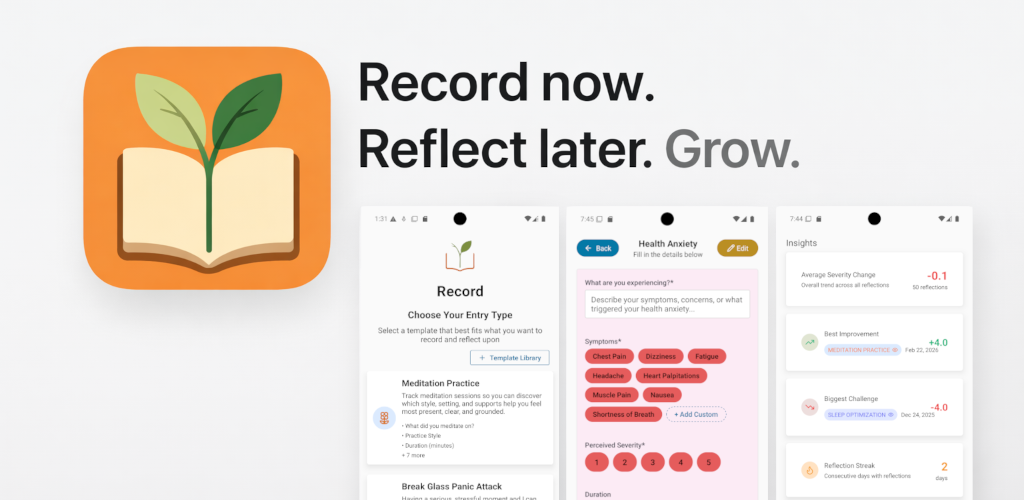
 Record Reflect Recover
Some social situations leave you buzzing; others leave you wiped. If you don’t track which is which, it’s easy to overcommit or blame yourself when the real issue is context - who was there, how long it lasted, and how you felt before and after. Recording social interactions and reflecting later with a bit of distance can reveal hidden energy drains and the patterns behind them. Researchers often study similar experiences under terms such as emotional exhaustion, social fatigue, or emotional labor. Here’s what the research says and how a simple record–reflect habit can help.
The problem: why social energy feels invisible until you look back
In the moment, you might feel fine - or stressed - but the real cost often shows up later: fatigue a few hours after a long meeting, anxiety the next day after a party, or a vague sense of being “on” for too long. Without a record of who you were with, the setting (1:1, small group, large group, work, family), and how you rated your stress at the time, it’s hard to see which types of interactions consistently drain you and which energize you. Many people assume they “should” enjoy all socializing or that feeling drained is a character flaw. In reality, social interaction can be both rewarding and depleting; the key is spotting your personal pattern so you can plan recovery and set boundaries. For more on how delayed reflection improves clarity, see Why Reflecting Later Helps You Think More Clearly.
What the research says about social interaction and energy
While researchers do not typically refer to “social energy tracking,” studies of emotional exhaustion and social stress examine similar patterns. Experience-sampling research suggests that sociable or extraverted behavior can feel good in the moment yet be associated with greater fatigue a few hours later. Other work on emotional labor and interpersonal demands shows that how we manage social interactions can predict emotional exhaustion. Together, that makes a practical case for recording social interactions in the moment and reflecting later on whether they ultimately felt energizing, draining, or neutral.
In an experience-sampling study, Leikas found that extraverted (sociable) behavior was positively related to current mood and lower fatigue in the moment - but predicted higher fatigue two to three hours later. An earlier study from the same research line (Leikas & Ilmarinen) had already shown that extraverted behavior was linked to immediate mood gains and lower fatigue concurrently, but to higher fatigue after about a 3-hour delay. So feeling good while socializing doesn’t mean you won’t pay a cost later; the tiring effect is real and measurable. Affective benefits and mental fatigue can coexist: you can be tired and happy. That makes it important to track not only how you felt during an interaction but how you feel hours or a day later.
Why do some social interactions feel good in the moment but draining later?
The same experience-sampling work explains the mismatch: in-the-moment mood and energy are separate from delayed fatigue. Recording your stress level and context when it happens, then reflecting a few hours or a day later (e.g., “Did this energize me, drain me, or feel neutral?”), surfaces that gap so you can spot your own patterns instead of guessing.
Research on emotional exhaustion in social and work contexts fits the same picture. In an experience-sampling study, surface acting (e.g., faking or suppressing emotions in interactions) was linked to emotional exhaustion through greater psychological effort and lower felt authenticity; the type and quality of social interactions thus matter for later depletion. That supports the idea that tracking which environments, people, and durations leave you depleted - and reflecting later on whether each interaction was a gain, drain, or neutral - gives you data that lines up with a practical approach to spotting hidden drains.
Practical example: from guesswork to patterns
Imagine you often feel exhausted after “fun” plans. You might assume you’re broken or that you need to say no to everything. Instead, try recording each interaction when it happens: who (e.g., one close friend vs several acquaintances), setting (dinner 1:1 vs big party), duration (e.g., 90 minutes), and your social stress level on a 1–5 scale. Set a reminder to reflect in 4 hours, 1 day, or 3 days. When the reminder fires, rate how you feel now and whether the interaction was a gain, drain, or neutral; note any anxiety afterward. Over time you might see that 1:1 dinners energize you while large groups drain you, or that work events leave more next-day anxiety than friend hangouts. That’s the approach in action - no long journaling, just short entries and delayed reflection.
In Record Reflect Recover, the Social Interaction Energy Tracking template supports this. You log what happened, who you saw, the setting (1:1, small group, large group, work, family, friends, etc.), duration, and your social stress level in the moment, and you choose when to reflect (4 hours, 1 day, 3 days, or 1 week). When you reflect, you compare stress then vs now, note whether the interaction was a gain, drain, or neutral, and capture anxiety afterward and a key lesson. The template keeps the record–reflect loop explicit so you build a clear picture of which contexts support or undermine your wellbeing.
How the Record → Reflect method helps
The Record → Reflect method fits this kind of tracking well: capture the interaction when it’s fresh (who, setting, duration, stress level), then reflect when you have distance. That delay lets you see the gap between in-the-moment stress and how you feel later, and whether the interaction ultimately energized or drained you. Micro-entries take seconds; reflection takes a few minutes. Over time you stop guessing and start seeing patterns - which settings, people, and durations to lean into and which to limit or buffer with recovery time.
Conclusion
Recording social interactions and reflecting later can reveal hidden energy drains by turning vague fatigue and anxiety into clear patterns. Experience-sampling research shows that sociable behavior is related to later fatigue, and work on emotional labor shows that how we manage interactions can predict emotional exhaustion. Tracking who, where, and how long - then comparing stress then vs now and whether each interaction energized or drained you - gives you a practical way to spot what works for you. A simple record–reflect habit, like the Social Interaction Energy Tracking template in Record Reflect Recover, can help you protect your wellbeing without long journaling sessions. For more on delayed reflection and clarity, see Why Reflecting Later Helps You Think More Clearly.
Frequently asked questions
Why do some social interactions feel good in the moment but draining later?
Experience-sampling research shows that sociable behavior is linked to better mood and lower fatigue right then - but to higher fatigue 2–3 hours later. So the “social battery drained” feeling is real and often delayed. Recording who you were with, the setting, and how you felt at the time, then reflecting hours or a day later on whether it energized or drained you, helps you see that gap and spot your own patterns.
What is social energy tracking?
While researchers do not typically refer to “social energy tracking,” studies of emotional exhaustion and social stress examine similar patterns. In practice it means recording who you were with, the setting, duration, and your stress or energy level during social interactions, then reflecting hours or days later to see whether each interaction energized you, drained you, or felt neutral. Over time you spot patterns (e.g., 1:1 vs groups) and can plan recovery and boundaries without long journaling.
Why does socializing drain my energy?
Research links sociable behavior to higher fatigue 2–3 hours later; you can feel good in the moment and still be tired or exhausted afterward. Personality and context also matter. Tracking which situations and durations leave you socially exhausted helps you see what to lean into and what to limit or buffer with recovery time.
How do I track social fatigue without journaling for hours?
Use short entries: who, setting, duration, and a 1–5 stress or energy rating at the time. Set a reflection reminder (e.g., 4 hours, 1 day, or 1 week). When you reflect, rate how you feel now and whether the interaction was a gain, drain, or neutral. A few minutes per interaction is enough to build useful patterns.
What’s the best way to reflect on social stress before and after?
Record your social stress level in the moment, then reflect at a chosen time (e.g., next day). Compare “stress then” to “stress now,” note whether the interaction energized or drained you, and any anxiety afterward. That before–after comparison reveals hidden drains and helps you manage your energy.