 Record Reflect Recover
When a symptom flares, it’s easy to blame one thing or feel like it came out of nowhere. Without a record of what preceded it - sleep, stress, diet, exercise, or other events - you’re left guessing. Tracking the flare and its preceding events in the moment, then reflecting later on how concerning it is now and what may have been associated with it, helps you see patterns that memory alone misses. A symptom tracking journal built around “record now, reflect later” turns guesswork into pattern data so you can surface possible triggers and plan for next time - and generate hypotheses to discuss with a clinician.
The problem: why flare triggers stay hidden
Flare severity in the moment can feel overwhelming, and we’re not reliable historians: we often forget what we did or how we slept in the days before a flare, or we latch onto one cause and ignore others. Without logging symptom type, onset time, preceding events (sleep, stress, diet, exercise, illness exposure), and severity when it happens - and then returning later to rate how concerning it is now, note a possible driver to discuss with your clinician, and note what helped - you miss the patterns that link preceding events to flare timing. The goal isn’t to replace medical advice; it’s to build a clear picture of your symptom patterns and factors associated with flares so you can work with your care team and adjust what you can control. For more on how delayed reflection improves clarity, see Why Reflecting Later Helps You Think More Clearly.
What the research says about daily tracking and flare triggers
Evidence from chronic musculoskeletal and inflammatory conditions supports the value of daily symptom tracking and of comparing the period before a flare to non-flare periods to identify associated factors.
In a 30-day mobile health study of rheumatoid arthritis, participants logged daily pain severity and related symptoms (mood, anxiety, sleepiness, etc.) via smartphone and wore accelerometers for sleep and activity. Researchers used a case-crossover design: they compared the three days before a pain flare (“hazard” period) to three-day control periods that did not precede a flare. Worsening mood over three days was associated with about a twofold increase in the odds of a pain flare the following day; greater variability in anxiety and in sleepiness over three days also increased the likelihood of flares. The authors concluded that changes in sleep patterns and emotional distress were associated with pain flare occurrences and that daily mHealth data can identify pain flares and support timely, personalized management. That aligns with recording preceding events (sleep, stress, mood-related factors) when you log a flare and reflecting later on possible drivers to discuss with your clinician.
In axial spondyloarthritis, a study using a smartphone app for daily self-reported flare and symptoms found that most participants recorded at least one flare, with significant relationships between flare status and the variables tracked (e.g., pain, fatigue, sleep, exercise, mood, stress). Smartphone-based daily tracking captured patterns in disease experience that aren’t always visible in routine clinic visits. That supports a chronic symptom flare tracking approach: recording symptom type, onset, preceding events, and severity in the moment, then reflecting later to rate how concerning it is now and to note possible drivers to discuss with your clinician.
In knee osteoarthritis, a web-based case-crossover study asked adults who reported a flare to capture exposure to 21 possible triggers in the 72 hours before the flare (hazard period) and at scheduled control times. Thirteen exposures - including activity-related and psychosocial or environmental factors - were positively associated with flare onset within 24 hours; median flare duration was 5 days. The authors noted that this evidence can inform prevention and acute symptom management. That fits a “record flare, record preceding events, reflect later” habit: you build a personal record of what tends to precede your flares so you can surface possible triggers and plan (e.g., pacing activity, managing stress, sleep, or diet).
Why do preceding events matter for flare patterns?
In the moment, a flare can feel like the only thing that matters; in retrospect, the days before often show a pattern - poor sleep, high stress, a change in diet or exercise, or an illness exposure. Research using case-crossover and daily-diary designs shows that comparing the period just before a flare to non-flare periods can help identify which factors are associated with flare onset. Recording preceding events when you log the flare (so you don’t rely on memory later) and then reflecting at 4 hours, 1 day, 3 days, or 1 week lets you compare “how concerning is this now?” to “what was going on before?” and note possible drivers to discuss with your clinician. That’s surfacing possible triggers in action: short entries and delayed reflection so you see patterns and highlight factors associated with flare onset.
Practical example: from guesswork to a plan
Imagine you have recurrent symptoms (e.g., fatigue, pain, or GI flares) and you’re not sure what triggers them. You record each flare when it starts: symptom type, approximate onset time, preceding events (sleep, stress, diet, exercise, illness exposure), and severity on a 1–5 scale. You set a reflection reminder for 4 hours, 1 day, 3 days, or 1 week. When the reminder fires, you see your entry and answer: How concerning is this now? What seems like a possible driver to discuss with your clinician (sleep, stress, diet, exercise, unknown)? What helped? What’s one change to try next time? Over time you might see that poor sleep or a stressful stretch often precedes a flare, or that a certain type of exercise or food lines up with onset. That’s symptom pattern tracking in action - turning flares into data so you can surface patterns and work on prevention or reduction with your care team.
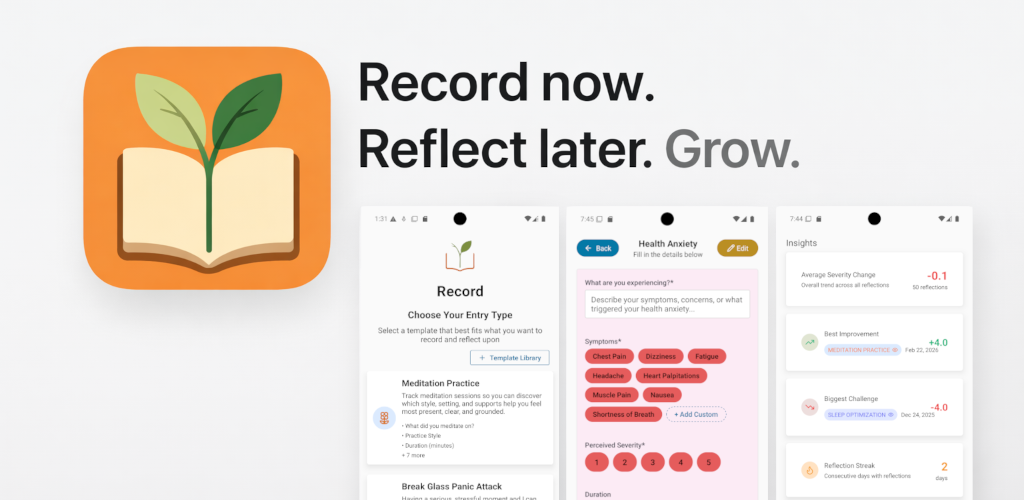
In Record Reflect Recover, the Chronic Symptom Flare Tracking template is built for this. You log symptom or flare type, onset time, preceding events (sleep, stress, diet, exercise, illness exposure), and flare severity in the moment, and choose when to reflect (4 hours to 1 week). On reflection you rate how concerning it is now, note a possible driver to discuss with your clinician, note what helped, and capture one plan for next time. The template keeps the record–reflect loop explicit so you link preceding events to flare timing and see patterns - factors associated with flare onset. It doesn’t replace medical care; it supports clearer conversations with your doctor and more informed self-management.
How the Record → Reflect method helps
The Record Reflect Recover app is built around record now, reflect later. For symptom flare tracking, that means: capture the flare when it happens (symptom type, onset, preceding events, severity), then reflect at a set time to rate how concerning it is now, note a possible driver to discuss with your clinician, and decide one change for next time. That comparison - severity then vs now, and preceding events vs possible driver - gives you pattern data you can’t reliably get from memory alone. Research on daily tracking and case-crossover designs in chronic conditions supports that recording symptoms and preceding events and reflecting later can surface possible triggers and inform prevention and management. A symptom tracking journal or health diary that uses “record flare, reflect later” fits that evidence: it helps you highlight factors associated with flare onset and build a plan for the next flare (and hypotheses to discuss with your clinician).
Conclusion
Possible flare triggers often stay hidden when we don’t record what preceded the flare or when we rely on memory alone. Tracking symptom flare-ups - type, onset, preceding events (sleep, stress, diet, exercise), and severity - then reflecting later on how concerning it is now, possible drivers to discuss with your clinician, and what helped turns each flare into data. Research in rheumatoid arthritis, axial spondyloarthritis, and knee osteoarthritis shows that daily symptom tracking and comparing the period before a flare to control periods can reveal associations with sleep, mood, anxiety, activity, and environmental factors. A symptom tracking journal that uses “record now, reflect later” supports surfacing possible triggers and symptom pattern tracking so you can highlight factors associated with flare onset and plan for next time. For more on delayed reflection and clarity, see Why Reflecting Later Helps You Think More Clearly.
Frequently asked questions
What is a symptom tracking journal?
A symptom tracking journal is a place to log flares or symptoms in the moment - symptom type, onset time, preceding events (sleep, stress, diet, exercise), and severity - and then reflect later on how concerning it is now, possible drivers to discuss with your clinician, what helped, and one plan for next time. It supports the record–reflect loop so you can surface patterns and factors associated with flare onset.
How do I surface possible triggers for my symptom flares?
Record each flare when it starts: symptom type, onset time, preceding events (sleep, stress, diet, exercise, illness), and severity. Set a reflection reminder (e.g., 4 hours to 1 week). When you reflect, rate how concerning it is now and note a possible driver to discuss with your clinician. Over time, compare what preceded flares to non-flare periods to see which factors are associated with flare onset - that surfaces possible triggers and generates hypotheses you can discuss with your care team.
Does research support tracking preceding events before a flare?
Yes. Studies in chronic conditions (e.g., rheumatoid arthritis, knee osteoarthritis) use daily or frequent symptom tracking and case-crossover designs that compare the period just before a flare to control periods. They find that factors such as sleep, mood, anxiety, and activity are associated with flare onset, supporting the value of recording preceding events and reflecting later to surface possible drivers and generate hypotheses to discuss with a clinician.
How do I track symptoms without it taking forever?
Use short entries: symptom or flare type, approximate onset, preceding events (sleep, stress, diet, exercise), and a 1–5 severity rating. Set a reflection reminder (4 hours, 1 day, 3 days, or 1 week). When you reflect, rate how concerning it is now, note a possible driver to discuss with your clinician, note what helped, and one change for next time. A few minutes per flare is enough to build useful symptom patterns.